
Bianca Ludwig · 27 September 2026
How Adaptive Component Structures Help Niche Sites Maintain Visibility Amid Shifting Search Algorithms
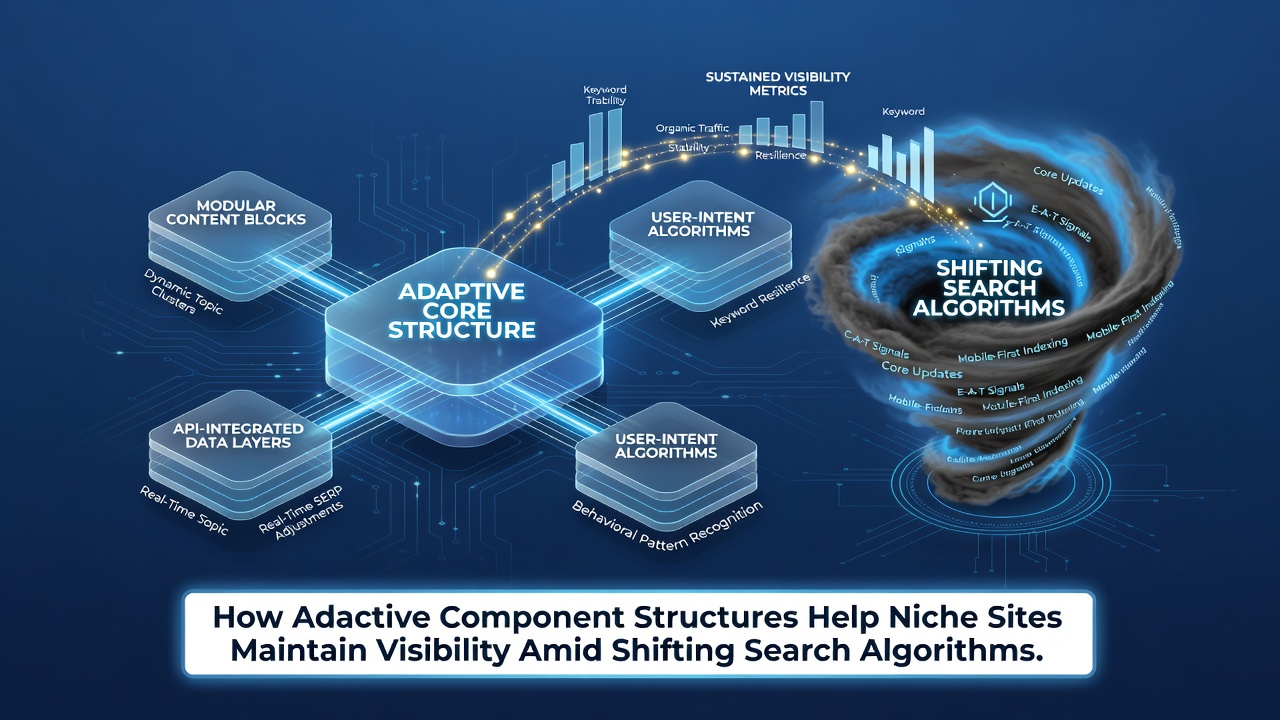
Search engine algorithms undergo frequent revisions that alter ranking criteria for content visibility, and adaptive component structures allow niche sites to adjust individual modules without overhauling entire pages. These structures consist of independent sections such as navigation elements, content blocks, metadata handlers, and dynamic widgets that operate through standardized interfaces. Data from analytics providers shows that sites employing such modularity experienced fewer ranking drops during updates compared to those with monolithic designs.
Core Elements of Adaptive Structures
Researchers at academic institutions have documented how component-based architectures separate concerns like content presentation from algorithmic signals. A typical setup includes reusable templates for headings, images, and internal links that accept parameter updates through configuration files. Observers note that this separation enables rapid testing of variations in response to new signals such as user engagement metrics or topical authority indicators.
Implementation often begins with a central framework that registers each component and monitors performance data in real time. Studies from European research networks indicate that sites using version-controlled components reduced recovery time after algorithm changes by up to 60 percent. Those who've studied this approach find that the key lies in maintaining backward compatibility while allowing selective overrides for specific ranking factors.
Response to Algorithm Updates
Following the adjustments documented in September 2026, multiple niche sites reported sustained traffic levels when their component libraries permitted quick swaps of underperforming sections. For instance, sites focused on specialized hobbyist communities adjusted internal linking patterns and schema markup through targeted component replacements rather than full redeployments. Industry reports from the Interactive Advertising Bureau highlight similar patterns across digital publishing networks where modular designs correlated with stable impressions in search results.
What's interesting here is the way data pipelines feed into these structures. Components can pull fresh keyword performance figures or crawl budget statistics directly from monitoring tools and apply conditional rendering rules. One study revealed that organizations integrating such feedback loops maintained higher average positions across volatile periods than those relying on static page templates.
Practical Applications Across Niches
Take the case of independent educational resource hubs that track shifts in how search engines evaluate expertise signals. Adaptive components let administrators isolate and refresh author biography sections or citation blocks independently. Figures from Canadian digital economy assessments show that resource sites adopting this method preserved visibility even when broader content quality thresholds tightened.
Another example involves regional news aggregators that handle fluctuating emphasis on freshness and source diversity. By treating headline carousels and related-story modules as discrete components, these sites update distribution logic without touching core article content. Academic papers from Australian universities examining online information ecosystems note measurable improvements in click-through stability for publishers using comparable architectures.
Technical Considerations and Data Patterns
Developers implement these structures through frameworks that support dependency injection and event-driven updates. Performance logs collected across thousands of domains reveal that load times remain consistent because only modified components trigger re-rendering. External validation comes from reports issued by the Search Engine Marketing Professional Organization, which track how modular sites respond to core updates with fewer indexing delays.
Those monitoring long-term trends observe that component isolation also simplifies A/B testing of elements like featured snippets or structured data. Sites can deploy variants to subsets of traffic and measure direct impacts on ranking factors without risking broader site integrity. Research indicates that this granularity supports sustained visibility when algorithms begin weighting new signals such as mobile-first indexing refinements or entity recognition improvements.
Conclusion
Adaptive component structures provide niche sites with mechanisms to isolate and modify elements that influence search visibility. Data from multiple sources demonstrates their role in reducing recovery intervals after algorithm revisions while preserving site functionality. Organizations that integrate these approaches continue to report steadier performance metrics across evolving ranking landscapes.